Hiring a procurement head takes more than checking purchase values, years of experience and a list of suppliers.
A candidate may have managed a large budget without making the most important decisions. Another may report impressive savings without explaining whether quality, delivery or inventory costs suffered.
For an industrial business, the assessment should explore how the person balances cost, supply continuity, integrity and the needs of other departments.
Here are six areas to examine before making an offer.
1. Establish What They Actually Owned
Start by understanding the candidate’s responsibilities.
Did they develop sourcing strategies, approve supplier recommendations and lead negotiations? Or were those decisions made elsewhere?
Ask about the categories they handled, their approval limits, team size and involvement in contracts. Distinguish between buying raw materials, capital equipment, services and routine supplies.
Ask: “Walk us through an important purchase you personally led. Which decisions were yours?”
Look for a clear explanation of their contribution, the people involved and the outcome. Give them room to describe achievements without disclosing a previous employer’s confidential information.
2. Look Beyond the Claimed Savings
A lower purchase price does not explain the full value of a procurement decision.
CIPS guidance on total cost of ownership considers costs across acquisition, use and disposal, alongside the initial purchase price.
For an industrial purchase, relevant considerations might include freight, installation, energy use, servicing, inventory and replacement.
Ask: “Tell us about a purchase where the cheapest quote was not the best choice. How did you compare the options?”
When candidates describe savings, explore the baseline. Was the comparison against a previous price, an opening quotation or a budget? Did specifications, quantities or market conditions change?
Listen for a fair explanation of the result and its limitations.
3. Test Their Approach to Supplier Risk
A supplier list tells you who the candidate has worked with. It does not tell you how they respond when a critical supplier struggles.
CIPS supplier-management guidance emphasises performance monitoring, communication and addressing the causes of poor performance.
Ask: “A critical supplier tells you a delivery will be late. What do you establish first, and whom do you involve?”
A useful answer should consider the operational impact, available stock, realistic recovery dates and alternatives. It should also explain how the candidate would work with production, quality, engineering or other relevant teams.
An alternative supplier may require technical approval or qualification. Explore how the candidate handles those constraints rather than assuming every purchase can be moved immediately.
4. Explore Integrity Through Specific Situations
Integrity deserves more than the question, “Are you ethical?”
CIPS places ethics and the handling of conflicts of interest within its procurement learning framework. Translate that principle into situations relevant to your business.
Ask: “What would you do if a senior colleague pushed for a preferred supplier without a documented comparison?”
Follow up with questions about supplier gifts, personal relationships and urgent purchases that bypass normal controls.
Look for clear judgement: declaring conflicts, following company policy, documenting decisions and escalating concerns appropriately.
Speed matters in procurement. So does being able to explain why a decision was made.
5. Assess How They Lead Across Departments
A procurement head needs to work with people whose priorities may differ.
Finance may focus on cash flow. Operations may need immediate availability. Quality may reject a proposed substitute. The procurement team needs someone who can bring those requirements into a workable decision.
Ask: “Describe a disagreement with another department over a purchase. How was it resolved?”
Explore how they clarified the requirement, explained the options and agreed on responsibility.
Also ask how they develop their team. Can buyers make decisions within clear limits, or does every issue depend on the head?
Look for examples of coaching, delegation and improvements that continued beyond one negotiation.
6. Use a Short, Realistic Assessment
Support the interview with a small fictional exercise.
CIPD guidance recommends structured interviews with consistent questions and scoring criteria. It also describes skill-based assessments that resemble tasks performed in the role.
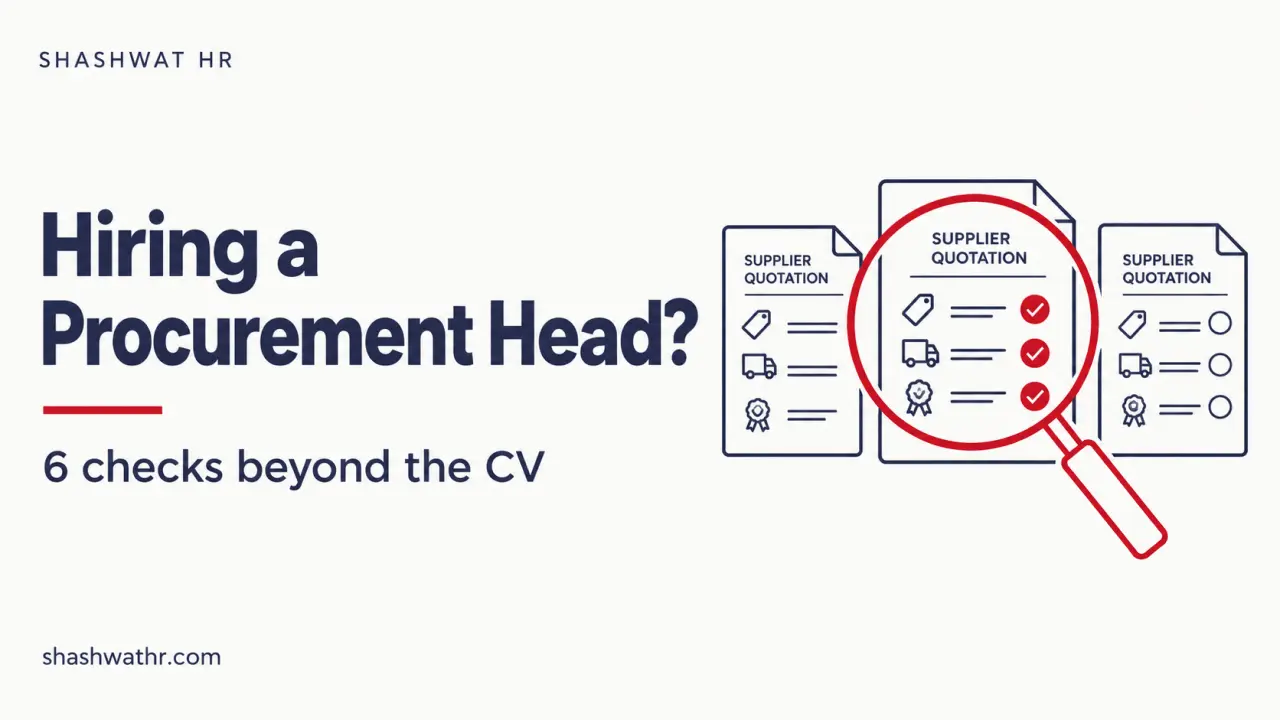
For example, give each shortlisted candidate the same three fictional supplier offers:
One has the lowest price but a long delivery period.
One costs more but has a stronger delivery record.
One offers attractive payment terms but has not completed technical qualification.
Provide the same information about specifications, stock, demand and approval requirements.
Ask candidates to explain their recommendation, identify missing information and describe their next steps. There does not need to be one predetermined winning supplier.
Assess their reasoning, assumptions and communication. Keep the task brief, explain it in advance and avoid using candidates to solve a live purchasing problem without compensation.
Hiring a Procurement Head: Compare the Evidence
Before interviews begin, agree on the capabilities the role requires. Then use the same core questions and assessment criteria for each candidate.
Compare evidence of commercial judgement, supplier management, integrity and leadership. Where appropriate, use reference checks—with the candidate’s permission—to explore relevant responsibilities and achievements.
A strong appointment should make sense beyond the CV: you should understand what the person has done, how they make decisions and where further support may be needed.
Discuss Your Recruitment Requirement
Shashwat HR’s recruitment experience includes procurement and commercial leadership roles. Led by Shobhit Tyagi, who brings more than 30 years of HR experience, we begin by understanding the responsibilities behind the position.
If you are hiring a procurement head or another specialist leader, contact Shashwat HR to discuss your requirement.